THREE:Lord Durham at once resigned, and was succeeded by Mr. Poulett Thomson, afterwards Lord[448] Sydenham, who fully adopted his policy, which was ably expounded in an important report from the pen of Mr. Charles Buller, with additions by Gibbon Wakefield. It was characterised by profound statesmanship, and was the basis of the sound policy which has made united Canada a great and flourishing State. Meanwhile, the returned prisoners from Bermuda showed their sense of the leniency with which they had been treated by immediately reorganising the rebellion. Sir John Colborne, the commander-in-chief, who had, on Lord Durham's departure, assumed provisionally the government of the colonies, thereupon proclaimed martial law, and stamped out the insurrection. Only twelve of the principal offenders were ultimately brought to trial, of whom ten were sentenced to death, but only four were executed. The persons convicted of treason, or political felony, in Upper Canada, from the 1st of October, 1837, to the 1st of November, 1838, were disposed of as follows:¡ªpardoned on giving security, 140; sentenced to confinement in penitentiary, 14; sentenced to banishment, 18; transported to Van Diemen's Land, 27; escaped from Fort Henry, 12. The American prisoners had been sent to Kingston, and tried by court-martial on the 24th of November. Four of them were sentenced to death, and executed, complaining of the deception that had been practised on them with regard to the strength of the anti-British party, and the prospects of the enterprise. Five others were afterwards found guilty and executed. The American Government, though deprecating those executions on grounds of humanity, disclaimed all sanction or encouragement of such piratical invasions, and denied any desire on its part for the annexation of Canada.
FORE:AFTER THE PAINTING BY SIR DAVID WILKIE, R. A., IN THE ROYAL COLLECTION.
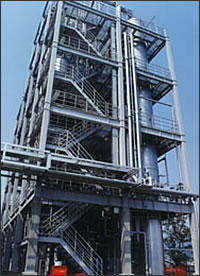
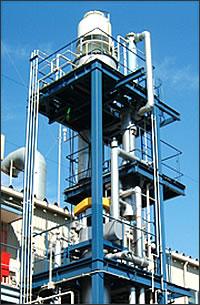
Methanol refinement systems, amyl alcohol refinement systems, ethanol refinement systems, hexanol distillation systems, propanol refinement systems, cyclohexanol distillation systems, isopropanol dehydration systems, ethylene glycol recovery systems, and butanol distillation systems.
FORE:No sooner had Collot d'Herbois, Barr¨¨re, and that party triumphed over Robespierre than they summoned the members of the tribunal to their bar¡ªay, on the very morning of the day of his execution¡ªand voted them honours amid much applause. The tribunal replied, that though a few traitors like Coffinhal and Dumas had found their way into the tribunal, the majority of them were sound and devoted to the Convention. Accordingly, the next day the Convention handed over to Fouquier-Tinville and his colleagues a list of fresh proscriptions of sixty-nine municipals, and a few days afterwards¡ªnamely, the 12th of Thermidor, being the 30th of July¡ªthey added twelve more, completing eighty-one victims! These were all executed within twenty-four hours. The Convention then fell into new divisions, some members contending for its being time to cease these tragedies, others insisting on maintaining them. Billaud-Varennes, Barr¨¨re, and Collot d'Herbois defended the guillotine and Fouquier-Tinville, but the greater number of the enemies of Robespierre denounced them, declared themselves the overthrowers of Robespierre, and assumed the name of Thermidorians, in honour of the month in which they had destroyed him. For the Thermidorians saw that the better part of the public had become sick of blood, and they set about contracting the Reign of Terror. They reduced the powers of the two governing Committees; they decreed that one-fourth of the members should go out every month; they reduced the revolutionary sections of Paris from forty-eight to twelve, and abolished the forty sous a day to the sansculotte patriots for their attendance. A month after the execution of Robespierre, Tallien made a fierce onslaught on the Terrorist system, and declared that there were numbers yet living who had been equally merciless with Robespierre, Couthon, and St. Just; and the next day Lecointre denounced by name Barr¨¨re, Billaud-Varennes, and Collot d'Herbois. To put an end to the Jacobin resistance, the Convention closed the Jacobin Club altogether, which had thus only survived the fall of Robespierre about four months. Thereupon the Jacobins began to denounce the Thermidorians as anti-Republicans, but they retorted that they were Republicans of the purest school¡ªthat of Marat.
Hexane distillation systems, tall oil distillation systems, benzene distillation systems, lubricating oil refinement systems, xylene-free distillation systems, low-boiling gas distillation systems, ethylbenzene recovery systems, fusel oil distillation systems, naphthalene distillation systems, propylene recovery systems, and turpentine oil distillation systems.
FORE:Before the conclusion of the reign of George II. a new school of fiction had appeared. De Foe had, besides his "Robinson Crusoe," opened up the inexhaustible field of incident and character existing in actual life in his "Colonel Jack," "Moll Flanders," "Roxana," and other novels, and Fielding and Richardson extended it. Fielding, too, died six years before the beginning of this reign, and Richardson in the first year of it. But their works were in full circulation, and extended their influence far into this period. They have, therefore, been left to be noticed here in connection with the class of writers to whom they gave origin, and to whom they properly belong. Richardson (b. 1689; d. 1761) seems to have originated the true novel of real life in his "Pamela," which was the history of a servant, written with that verisimilitude that belongs to biography. This was commenced in 1740, and brought to a conclusion in 1741. The extra-ordinary sensation which it created was sufficient proof that the author had struck into the very heart of nature, and not only knew where the seat of human passion lay, but had the highest command over it. It was not, in fact, from books and education, but from native insight and acute observation, that he drew his power. He was born in Derbyshire, and received his education at a common day-school. He was then apprenticed as a printer in London, and established himself as a master in that business, which he continued to pursue with great success. His "Pamela" ran through five editions in the first year. In 1748[172] appeared his "Clarissa Harlowe," and wonderfully extended his reputation, which reached its full blaze in his "Sir Charles Grandison," in 1754. In all these works he showed himself a perfect analyst of the human heart, and detector of the greatest niceties of character. Though he could have known little or nothing of aristocratic life, yet, trusting to the sure guidance of nature, he drew ladies and gentlemen, and made them act and converse as the first ladies and gentlemen of the age would have been proud to act and speak. A more finished gentleman than Sir Charles Grandison, or correcter lady than Miss Byron, was never delineated. The only thing was, that, not being deeply versed in the debaucheries and vulgarisms of the so-called high life of the time, he drew it as much purer and better than it was. It is in the pages of Fielding and Smollett that we must seek for the darker and more real character of the age. The fault of Richardson was his prolixity. He develops his plot, and draws all his characters, and works out his narrative with the minutest strokes. It is this which prevents him from being read now. Who could wade through a novel of nine volumes? Yet these were devoured by the readers of that time with an avidity that not even the novels of Sir Walter Scott were waited for in the height of his popularity.
Ether distillation systems, camphor distillation systems, epichlorohydrin distillation systems, aniline distillation systems, dioxane refinement systems, acetonitrile distillation systems, furfural refinement systems, formalin distillation systems, cyclohexane distillation systems, monoethanolamine rectification systems, polyglycol ether distillation systems, dimethylformamide recovery systems, acrylic glycol ether distillation systems, acrylonitrile refinement systems, acetone recovery systems, pyridine distillation systems, methyl ethyl ketone recovery systems, picoline distillation systems, methyl isobutyl ketone recovery systems, and acetaldehyde recovery systems.